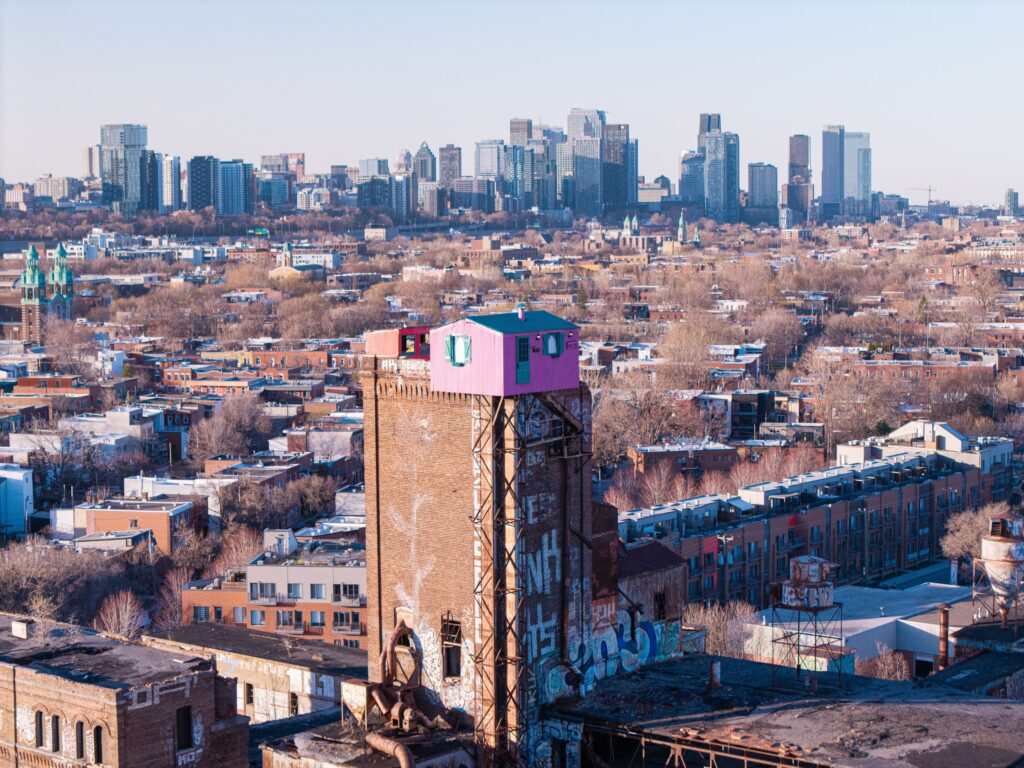
Yosef Rabi has spent years studying and operating within Montreal’s real estate market — one of Canada’s most misunderstood yet consistently compelling investment destinations. In 2026, the fundamentals that define Montreal’s market remain as relevant as ever: persistent rental demand, constrained supply, and a regulatory environment that rewards patient, disciplined investors. This guide covers what Yosef Rabi believes every investor should understand before entering or expanding within Montreal real estate.
Why Yosef Rabi Considers Montreal a Top Canadian Real Estate Market
Montreal is not Toronto. It is not Vancouver. That distinction matters — and for investors, it is largely a positive one. Montreal offers a combination of affordability, demand depth, and market stability that neither of Canada’s two most expensive cities can match at current valuations.
The city’s rental market has been running at vacancy rates near or below 2% for several consecutive years. That level of tightness — driven by sustained population growth, record immigration intake, and a construction pipeline that cannot keep pace with household formation — creates the conditions where income-producing real estate generates consistent, reliable returns.
Yosef Rabi’s focus on Montreal is rooted in this structural reality. As outlined in his CEOWORLD profile, Yosef Rabi’s investment approach is built on demand that is driven by people who genuinely need homes — students, new Canadians, young professionals, and families who cannot afford or choose not to enter an equally strained ownership market.
Yosef Rabi on Montreal’s Key Investment Neighborhoods
Not every Montreal neighborhood offers the same investment profile. Yosef Rabi’s market analysis distinguishes between areas based on demand durability, rent growth potential, and acquisition cost relative to income.
Rosemont-La Petite-Patrie
Remains one of the most sought-after inner-city neighborhoods for multi-family investors. Strong transit access, proximity to employment, and a renter demographic with above-average income stability make this area a consistent performer.
Verdun and LaSalle
Offer lower acquisition costs relative to Rosemont with comparable rental demand, particularly among young families and working professionals priced out of Plateau and Mile-End. These neighborhoods represent solid value-add opportunities for investors willing to manage older housing stock.
Laval and Longueuil
While technically outside Montreal proper, these municipalities function as Montreal’s residential overflow markets. Rents have risen, vacancy has tightened, and transit improvements continue to strengthen their appeal to commuters who work in the city.
What the Data Says About Montreal Rental Demand in 2026
CMHC’s rental market data consistently points to Montreal as one of Canada’s tightest major rental markets. Purpose-built rental vacancy has remained well below 3% for years. The causes are structural and unlikely to resolve quickly.
Immigration targets at the federal level continue to add tens of thousands of new Montreal-area residents annually, the overwhelming majority of whom enter the rental market first. International students at McGill, Concordia, UQAM, and Universite de Montreal add sustained demand year-round.
For more context on how Yosef Rabi approaches affordable housing in this environment, read his full market analysis on YosefRabi.com where he outlines his framework for income-producing real estate in 2026.
Yosef Rabi’s Framework for Montreal Real Estate Investment
Yosef Rabi approaches Montreal real estate acquisitions through a consistent framework built on three questions. First: does the property generate sufficient income in place to cover all costs with a margin? Second: is the location supported by structural demand drivers that will persist regardless of broader economic conditions? Third: is the acquisition price defensible based on current income, not future assumptions?
His journey from syndication to direct ownership — detailed in the article From Syndication to Real Estate Ownership — provides additional context on how this discipline was developed over time.
FAQ
Is Montreal real estate a good investment in 2026?
Yes, for investors focused on income-producing assets. Vacancy is low, demand is structural, and acquisition prices remain more rational than Toronto or Vancouver.
What neighborhoods does Yosef Rabi recommend in Montreal?
Yosef Rabi’s analysis points to Rosemont, Verdun, LaSalle, and the Greater Montreal suburbs of Laval and Longueuil as strong value propositions for investors in 2026.
How does Quebec’s rental regulation affect investment returns?
Quebec’s TAL framework governs allowable rent increases. Investors who understand the system can underwrite accurately and build returns within the regulatory structure. It rewards long-term holders over short-term flippers.
Further Reading & Resources
For more on Yosef Rabi’s work, market analysis, and investment approach, see the following:
Yosef Rabi: Building Affordable Housing with Purpose — CEOWORLD Magazine
Yosef Rabi Expands Focus on Affordable Housing — Yahoo Finance
Yosef Rabi on Smart Real Estate Investment in 2026 — YosefRabi.com
Yosef Rabi is a Montreal-based real estate investor and market analyst. Learn more at YosefRabi.com.